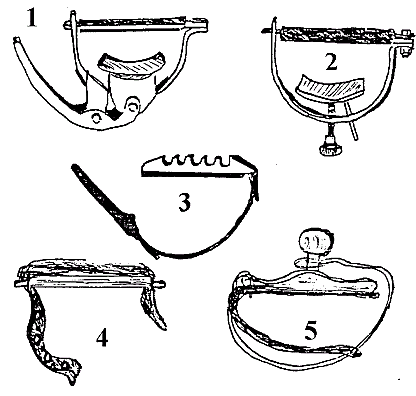
What does it all mean
Capo is an abbreviation of Italian word Capotasto.
(Capo = "at the beginning" or "at the top", or "head", as in
mafia boss.)
(Tasto = "guitar finger board").
The Spanish name for Capo is Cejilla (Say-Hee-Ya) which means "little eyebrow". This comes from the general
shape of the traditional model (5). It is a transposing device fixed across the strings and acts as an
artificial nut to raise the musical pitch. Traditionally, its purpose is to match what you play on the guitar
to the range of a singer's voice. It allows a guitarist to play familiar chord structures and falsetas in a
range of different keys. Western and country folk singers have also traditionally used a capo to accompany
themselves using a limited collection of chord shapes. It's amazing what you can do with a 3 chords and a
capo.
Even without a singer, it can be used to add a general brightness to the sound in dance accompaniment and solo
playing. For years I was scratching my head trying to figure out why I couldn't get my rendition of "Here comes
the Sun" to sound like the Beatles version. It was because the capo has to be on the seventh fret.
Some examples
1) Quick release spring action
2) Screw adjustment
3) Nylon strap with lever action. (the popular "Jim Dunlop" style)
4) Stretch elastic strap
5) Traditional design featuring leather strap, nylon chord and wooden peg.